Showing posts with label Tricks. Show all posts

Hal grades your bicycle locking skills

Elizabeth from BikeCommuters.com posted this to Facebook today. Hal is a wrench at a popular Manhattan bike shop. He takes to the mean steets and criticizes bad bicycle locking jobs.


In short, he's looking for 3 things:

  1. Use a really sturdy chain and lock (not a cable) to secure your frame to a large, immovable object.
  2. Make sure both wheels are secured to the frame or to the immovable object with more than just the axle nuts or QR skewers.
  3. Make sure the seat is properly secured (again, with something more than the seatpost collar)
I usually don't worry about my seat when I park at work. I have a thick towing chain that I pass through both wheels and the rear triangle, then around the bike rack. If I'll only be in and out (like the grocery store) I'll often use a cable lock, but I'll pass it through both wheels, the frame and the seat rails before attaching it to the rack. In higher risk areas (such as when I was riding to a not-so-great part of downtown Kansas City, MO for my monthly check-in at the unemployment office), I use both techniques at the same time.

Hal's comment on quiet streets generally being safer is generally spot-on, but you could be asking for trouble if your lock-up spot is too secluded and you frequently lock up there for long periods of time. He also discusses the fact that locks only buy you time. As a security guy, I would say that it's more complicated than that, but not by much.
  • If someone really wants YOUR bike (because it's the most expensive one they came across, because they hate you, or because it's the only bike around), then locks only buy you time.
  • If someone just wants something easy to steal (including individual bike wheels, seats, etc) and yours is locked up better than the others in the area, thieves will usually choose the easier target.
It's not as big of a problem in Kansas City as it is in larger metro areas, but bicycles are generally a commodity on the street. A working bicycle can be traded for about $25-$50 in goods or services unilaterally on the black market. It doesn't matter if it's a discount-store Bike-Shaped-Object or a carbon fiber track bike. Generally speaking, though, thieves are willing to put a little more work (and risk) into making extra money out of nice bikes by parting them out and fencing them or by trying to sell them as if they're the owner, either in person or on sites like Craigslist.

I'd still like to know where Hybridzilla ended up. I checked all the pawn shops, all the online places and the local newspaper want ads. I like to think it found its way to someone that appreciates and rides it much as I did. It was purpose-built for getting around reliably.

Random Tunage:
Derek Howell - Frozen
Cascade - Escape

  • Digg
  • Del.icio.us
  • StumbleUpon
  • Reddit
  • RSS
Read Comments

Tricks Of The Trade: Warmness

Elizabeth and I have been cranking out some tips for winter commuting over at BikeCommuters.com:

Toes Froze?

Cold Hands?

Snow Biking: Is that even safe?!

Protection from the elements

On keeping a cold-weather clothing log

I tend to put most of my helpful hints over there these days. My guess is you'll start seeing a lot more cold-weather tips.

  • Digg
  • Del.icio.us
  • StumbleUpon
  • Reddit
  • RSS
Read Comments

Hotter than Death Valley.

This is Death Valley. A high of 93°F and no humidity to speak of.


This is Kansas City. A high of 94°F and humidity by the truckload.


A quick look at the 4:00 PM stats shows that the heat index was well into the three digits across the metro, peaking at 110 at the KC International Airport.


Several of my friends think I'm insane riding in this. Heat can be dangerous. If you pay attention to your body and you're prepared for it, it's not too big of a deal. I covered some more tips for Surviving Summer over at Bike Commuters. It's an addendum to my original Beating the Heat article.


What are you doing this summer to make riding more comfortable?

  • Digg
  • Del.icio.us
  • StumbleUpon
  • Reddit
  • RSS
Read Comments

Tricks of the Trade: Hidden Paths

Earlier this week, Fritz posted a nod to a fascinating post on 5000 entitled "Bicycle Wayfinding in the Early 21st Century"

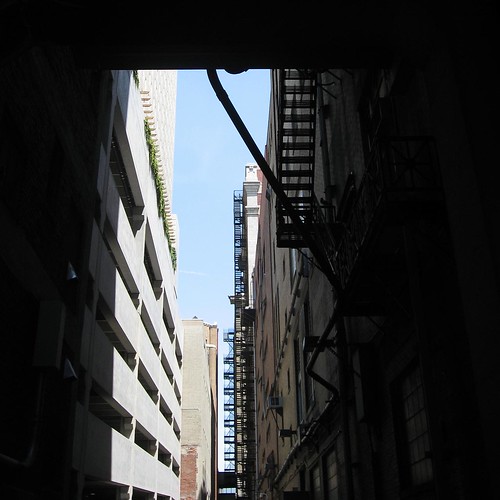
Interstitial spaces are those un-mapped, informal nooks, crannies, and shortcuts. Traveling off the grid. Cyclists who ride in urban areas are probably very familiar with these dark alleyways, parking garages, little paved paths or dirt alleys between urban homes and the like. If you don't, you should start keeping your eyes open for them.


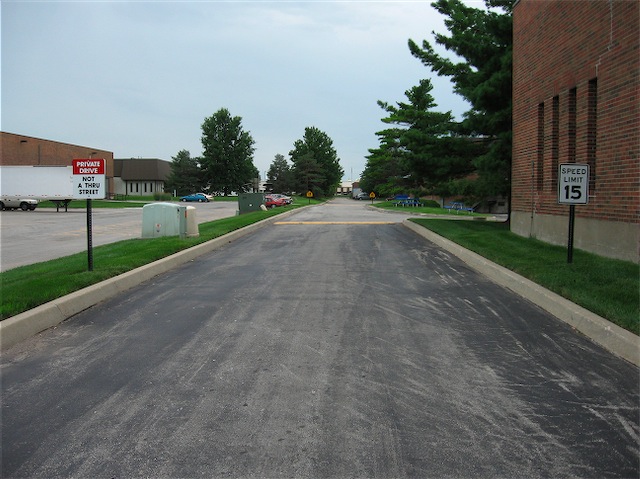
I use interstitial paths almost every single day, and their ubiquity isn't limited to dense, urban streetscapes. Closer to home in suburbia, I cut through business parks...


... industrial complexes ...


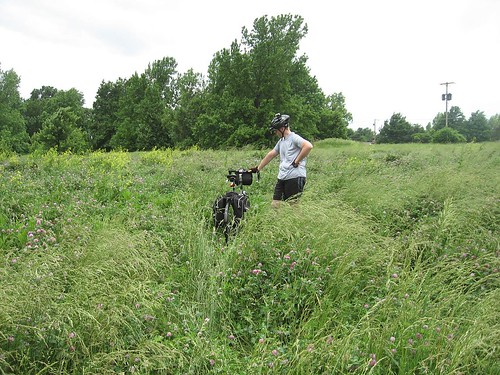
... grassy public areas (even when it pisses Chris off)...


... and even church parking lots, parks, little paths between cul-de-sacs and the like. What do they have in common? You won't see any of them on any map. Even the paths that look like roads show up only on aerial view, but they're highly unofficial dead-ends on street maps.

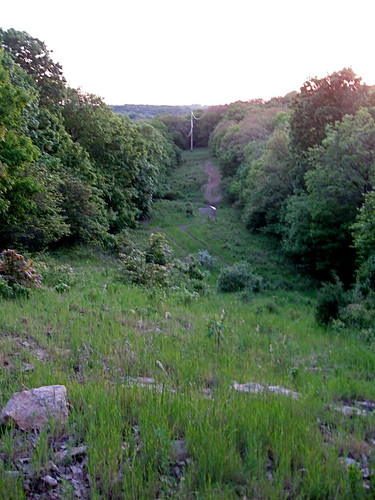
Here in KC, Mark Thomas has shown me several really nifty shortcuts, including access paths under high-voltage suburban power lines, dried stream beds, aqueducts, drainage tunnels and a host of other un-seen infrastructure ready for use by people who don't feel the need to stay between the painted lines. That was two years ago, and he continues to show me more of them, but I quickly learned to look for them on my own.


Brian's post is long, but worth the read. It links to resources, makes statements and shows photos that I can't possibly rival here without flat-out plagiarizing the original work. I agree with almost all of it.

Knowing the ins and outs of these off-the-map routes is actually pretty important if you plan on getting around town efficiently without the use of a car. I'd argue it's just as important as knowing the "goldmine" lesser-traveled and safer through streets and maybe more important than understanding the transit infrastructure in your area.

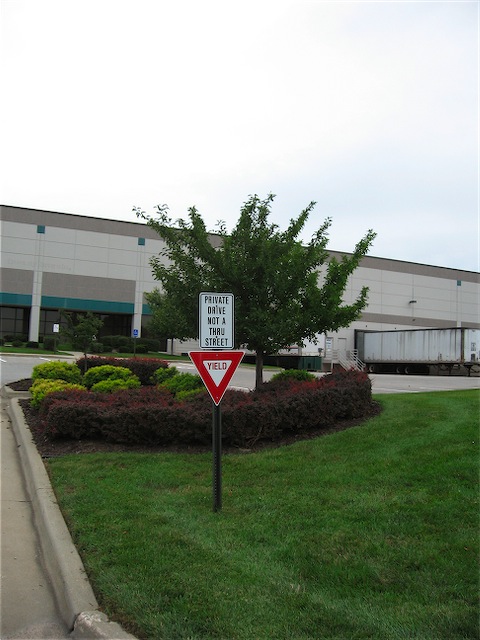
Staying on the lookout for new paths you didn't know about is key. Dropping what you're doing for a few minutes and exploring a new potential shortcut is the best way to get started. Since bicycles blur the line between vehicle and pedestrian, use it to your advantage, within reason! That is to say tear-assing through granny's flower garden or bubba's back yard isn't recommended. As for the "Private Drive" stuff? I usually see people on their smoke breaks as I pass through. They're friendly and wave. After years of this, I've never caught any flack for it. The second I'm told to knock it off, I'll find a detour.

Brian got me thinking about cataloging some of these little byways. Maybe I will get around to that some day.

  • Digg
  • Del.icio.us
  • StumbleUpon
  • Reddit
  • RSS
Read Comments

Tricks of the trade: Bike Repairs

My bottom bracket has been getting cranky lately. Pun intended.

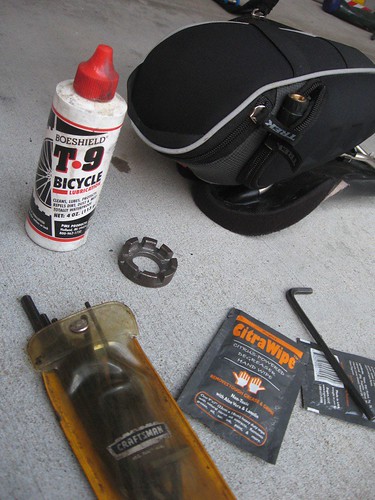
Noisy bottom brackets, if you catch them in time, often just need to be taken out, cleaned up, greased and re-installed properly. This takes special tools, but they don't cost much more than having a bike shop do the job once or twice. In my case, I've got many thousands of miles on the original BB, but I've serviced the BB three times now.

Jobs like bottom bracket service might be best left to the bike shop if you're just getting started, but shops will often try to upsell you or get you to replace an otherwise functional part with a brand new one even if you don't actually need it.


It's not that I have something against bike technicians. Some of my best cycling friends are wrenches by trade or they're moonlighting at bike shops in their downtime. My frustration comes from the industry: bike repair doesn't pay the bills; selling new bikes and accessories is what brings home the bacon. The tools to install these accessories are the same ones to fix bikes, and repair is for the most part only provided as a service to keep customers coming back.

Even if bike shops are fair -- and some are much more honest than others -- this is busy season. Bike shops get backlogged. Those of us who rely on our bikes for more than leisure can't always go a week without our bike while it sits in queue to be looked at.

For these reasons, I feel that it's very important for utility cyclists, randonneurs, commuters and bike tourers to have a firm understanding of how to do some basic bike repairs. Start with easy stuff that doesn't require many fancy tools (like changing your inner tube out).

As you run into other minor problems (derailleur adjustments, chain replacement), do some research and see if it's something you can do yourself. Some good sites:

Bicycle tutor
Park Tool Repair
Sheldon Brown

As always, feel free to comment here or drop me a line via e-mail, and I can probably point you in the right direction if you feel like taking a crack at fixing your bike. They're actually pretty simple machines. They're modular, and bikes of a decent quality usually have a lot of standardized components.

In other news, I scored a bell from last night's event at Overland Park city hall. Not wanting to crowd my handlebars any more than they are (you might call me "Captain Dashboard"), I mounted it to my seatpost. It works just fine there.


Oh, and I had a spectator while I was working on the bottom bracket.

  • Digg
  • Del.icio.us
  • StumbleUpon
  • Reddit
  • RSS
Read Comments

Tricks of the Trade: Rainy Commuting

Yesterday was my first truly rainy commute of 2009. I've ridden in some damp conditions and in sprinkles, but yesterday took all that to a new level with a day-long deluge that had waned into sprinkles by the time I got off work, leaving the roads with water rushing to the storm drains.

I've had a few people asking for advice on rainy commuting.

1st: Stay Safe
Visibility is reduced for both you and motorists. Make sure your lights work and use them even during the day. Reflective clothing is a bonus. Look ahead and ride slower if you need to. Stay diligent looking for road hazards. Water can obscure broken glass and road-debris, pot-holes, storm drains and other things you would normally avoid.

Painted or non-porous surfaces get very slippery when it's been raining. Use extreme caution when riding over expansion joints, manhole covers, road stripes (especially the wide "stop" lines), metal plates on the road and railroad tracks. This one gets me on occasion, as I'll explain in a bit.

2nd: Keep your gear dry
Most commuters haul stuff to and from work: work clothes, gadgets, papers, lunch and whatnot. That stuff doesn't do much good if it's wet. I use panniers with rain covers, but even those don't keep things 100% dry. You can buy waterproof panniers and messenger bags. I just wrap my sensitive stuff in plastic or use large zip-lock bags and re-use them until they're no longer waterproof. You have many options.

I also keep a complete spare change of clothes and a towel at the office for emergencies or in case I forget something at home. On seriously rainy days, I could just ride my bike and bring nothing along with me, then change into my dry clothes.

3rd: Comfort
Fenders keep rain from splashing up on your back and into your face and legs. Long after it rains, wet roads can make your commute miserable. Fenders fix that, and when it's raining, you'll get hit mostly by clean rain from the sky instead of experiencing the constant barrage of road grime -- that is until some car passes you and splashes it all over the place or you get stuck riding behind a cyclist without decent fenders.

You can buy specialty rainsuits, but less-expensive waterproof pants often get torn up quickly on a bicycle due to snagging in the chain and wear from the saddle. High-end gore-tex pants are expensive. I usually opt to let my legs get wet unless it's below 50 degrees outside.

Keeping a cheap $3 rain poncho around can help a lot when it's pouring like it was in Kansas City yesterday morning. It covers enough of your legs to keep your shorts from getting totally soaked. Combined with fenders, a cheap poncho is a good thing to have around. They're small and fit easily in panniers or backpacks.


I got my own taste of slippery metal yesterday:


I wasn't looking far enough ahead when I rode into that region. It's an expansion joint with two metal rails and a rubber pad between them. I have no clue why it's there. Once I'd crossed the perpendicular joint just past the paint stripe, it was too late to brake. The joint comes back across the road, which forced me to hit it almost parallel. My tire slipped, then fell into the groove. Fortunately, a little bit of road rash to the knee is the only bad thing that happened.

Of course, I've already written some stuff on how to handle road rash. After cleaning the wound, I covered it with Tegaderm and got on with my life. Tegaderm stands up to showering and covers scrapes with a breathable membrane that lets the healing process happen quickly and without scabbing.

  • Digg
  • Del.icio.us
  • StumbleUpon
  • Reddit
  • RSS
Read Comments

So, you're thinking about bicycle commuting?

Although it was near freezing this morning when I left, it was also the first time in months that I've seen a sliver of the sun above the horizon as I left home. That means that "bicycle season" is upon us, and I won't seem so crazy anymore.

With the looming economic woes, many folks are looking at ways to cut back the budget, either to make ends meet or to increase the size of their nest-egg. Now is a great time to break out that bike and take it for a spin to work. It's the fun, healthy, and cheap way to travel relatively short distances!

The Facts

  • The average person will be about 4 times faster on a bicycle than they would be on foot for a given amount of effort. People who walk at 2-3 MPH can comfortably cruise along at about 10 MPH.
  • Almost anyone can ride a mile or two on a bicycle. It just takes some getting used to.
  • About 40% of urban travel in the US is within 2 miles. Again, most people can ride that far.
  • There are many proven benefits to getting 30 minutes of cardio workout per day.
  • You can get 30 minutes of cardio out of 4-6 miles of bicycle riding.
  • With a proper diet, you won't likely need to eat more food than usual for these distances.
Bikes
It's all about comfort, but almost any bicycle will work fine for commuting a few miles each direction. Upright cruiser bicycles with fenders and chain guards are a popular choice for the urban bicycle commuter. Mountain bikes are cheap and plentiful, but don't do too well for longer distances. Road bikes, touring bikes and cyclocross bikes are popular for those who are used to weekend group rides, those who prefer a faster pace, or those who have longer commutes. A reputable bike shop should be able to help you decide on the right kind of bike.

If you've already got a bicycle that's gathering dust, why not have a bicycling friend or a bike shop look at it? If you're in the Kansas City area, I'd be happy to tune your bike up for you, and show you how to do routine maintenance checks. Just send me an email via the form on the right side of my website.

Accessories
Accessories are a personal preference thing. Feel free to eschew any of these if you don't think they're for you. Take helmets for example. After crashing WITH a helmet (and imagining how bad it could be without one), I usually opt to wear mine. Then again, I ride daily, sometimes as much as 29 miles round trip. I usually don't wear one when I ride to get groceries. That's a 2.5 mile round trip ridden mostly through parking lots and residential roads. The decisions are yours.

Lighting
In general, you will want some kind of lighting on your commuter bike. This will help grab the attention of the motorists, both oncoming and overtaking. The Planet Bike Superflash is a relatively inexpensive (and very bright) option for a tail light. It's what I use daily.

Headlights are a different thing entirely. They can basically be divided into two groups: "to see with" and "to be seen". The former group of lights are typically more expensive (yikes!) You really only need "to see with" lights if you intentionally ride in the early morning or late evening when ambient and/or overhead street lighting isn't enough to safely ride by. You can still find some relatively inexpensive lights to fit the bill here. Look for LED lights offering more than 140 Lumens (200+ is better) or Halogens offering more than 10 Watts (15 and up is better).

"To be seen" lights are usually flashing LED headlights. Many can be purchased for $25-$30. They are good to use in fog, rain, or toward sunrise and sunset. For this, I use an older 2.4 Watt halogen predecessor to the CatEye EL220.

If I'm recommending things to people who are just getting started, I recommend a "to be seen" headlight and tail light set. I wouldn't commute without them. Best of all, these less expensive lights are easy to find at almost any sporting goods store, or even the "bicycle shaped toy" aisle at big retail shops.

Reflectivity
Being seen, if you can't tell, is a bonus. Reflective vests, proper reflectors on your bicycle (front, rear, pedal reflectors and spoke reflectors) and other reflective items (Shoes with reflective material, reflective tape on your bicycle, etc) help you to be seen. Bicycling isn't about looking cool, so don't pretend. Be seen. This is more important for those who commute near dusk and dawn.

Cargo
This ties in with the next section, Logistics. Most commuters will have to carry stuff to and from work. Backpacks, panniers, cargo racks, trunk bags, messenger bags and handlebar bags are all viable solutions. You will have to choose what fits your needs and wants. It helps if your bicycle is compatible with the method you choose. Not all bikes are designed for cargo racks, for example; and wearing a backpack can be tricky whilst riding a recumbent.

Creature Comforts
Fenders can keep puddles from ruining your day and when it's raining lightly, they keep road grime from giving you the Butt Stripe Of Doom. Water bottles or hydration backpacks help on longer commutes or in hot climates. A seat wedge with flat-tire repair stuff is nice to have, but only if you're comfortable fixing your flat tires. Sometimes, it's just easier to carry a mobile phone so you can have a friend rescue you from those situations.

Logistics
At work, you may need specialized clothing that may or may not be conducive to cycling. You may also need to take lunch, a briefcase, or other bulky items along. Take these into account when figuring out how you are going to make sure you get to work with everything you need intact.

Clothes
When the weather is nice, you can get away with riding a bicycle in business casual or even more formal clothes, if you only have a mile or two worth of riding. Use an ankle strap or roll the pant leg up to keep it from getting stained or caught by the chain. Alternatively, use a bicycle with a chain guard. A T-shirt beneath the work clothes you'd normally wear will keep you from pitting-out that office shirt so easily.

If you've got a little further to ride, you might encounter puddles or rain, or you'd just rather not risk putting wear and tear on your work clothes, you can opt to do a number of things:
  • Keep work clothes and shoes in your office
  • Carry some of all of your work clothes with you on the bike every day
  • Occasionally haul a few days of clean clothes to the office (by bike or by car)
Those are just a few examples. Depending on what else you need to carry with you, you can determine the appropriate cargo solution as mentioned above.

Multi-Mode
When the weather isn't too great or I don't feel too well, I ride my bike to the bus stop. Many metropolitan areas facilitate bicycles on their trains and buses. The full 29-mile round trip is definitelty longer than most people would consider a reasonable bike ride. When I include the bus, I ride about 5-6 miles per day. This combination of bicycling with transit provides a great deal of flexibility. I no longer need to worry about taking the bus to the same place my car is parked. I have a bicycle with me downtown to get around with, and parking is free wherever I go.

More questions?
Feel free to ask in the comments!

  • Digg
  • Del.icio.us
  • StumbleUpon
  • Reddit
  • RSS
Read Comments

Tricks of the trade: Cold Psychology

Above all else, the primary thing you need to ride in temperatures that you perceive as "cold" is a willingness to expand your horizons.


This is not to say that someone who hung their bike up in September should just go on a sub-zero all-day epic in the midst of January. It is to say that "acclimating" to the temperature is mostly in your head. Jill and Doug aren't any more resilient than any other human being. They've just got experience, and they know what works for them because they bothered to give it a try. If you are Jill or Doug and are reading this, I'm sorry I gave away your dirty little secret.

Through experience alone, you figure out what works for you in the cold, so it's best to start venturing out for short periods of time or in "somewhat" cold climates, then expand your horizons as the weather gets colder, or start going out longer to determine where your weaknesses are.

Weaknesses can be in clothing:

  • too hot
  • too cold
  • a drafty seam in your favorite winter jersey
Weaknesses can be mechanical:
  • Drivetrain lubrication may be either too thick or doesn't protect from salt
  • The ratchet in an old freehub might fail to grab in cold temps
  • Your light's batteries might not last as long in the cold
Weaknesses can be mental, too. Those usually fade pretty quickly once you find out that you won't, in fact, die.

  • Digg
  • Del.icio.us
  • StumbleUpon
  • Reddit
  • RSS
Read Comments

From the readers: Cold Weather Gear

I've started getting a lot of e-mails from readers regarding cold weather and suggestions for riding in it.

To those who've e-mailed me, I've pretty much covered this in my replies to you.

what works best for me isn't guaranteed to work that well for you. It depends on how hard you ride, how much heat you build up on your own, and how far you have to ride. Your best bet is to experiment. Here's what I use, though:

  • Below 50: A long-sleeve t-shirt under a short-sleeve. Long pants (cargo pants or jeans) over bike shorts. A headband to keep my ears warm and some light gloves
  • Below 40: A windbreaker over a t-shirt, long pants over thermal long johns and a balaclava (kind of like a ski mask) with some light gloves
  • Below 25: A thin coat over a t-shirt, long pants over long johns, a balaclava and heavier gloves
  • Below 10: A thin coat over a sweat shirt over a t-shirt, long pants over flannel pants over long johns, balaclava with ski goggles (keeps the eyes from freezing) and heavy gloves
  • Below 0: A thick coat, sweat shirt, t-shirt, long pants, flannel pants, long johns, two ski masks, ski goggles, and mittens. No, really. Mittens. Keeping the fingers together keeps them warmer.
People vary in their comforts, a lot. You've got people like Kate who I think bundle up quite excessively for temps in the high 40s. Lobster claws? Fritz took this photo last year and I asked him what the temperature was, commenting that I didn't think it got that cold in the bay area.

Then you've got people like Doug who overheat wearing a balaclava (ski mask) even with a -25°F wind chill.

Experimenting is simple. Just keep a log of the temperature and precipitation, then write down what you wore and how well it worked or how badly it sucked. Use that as a guide for the next time. I didn't log every single condition I've ridden in, but I keep track of especially great clothing combinations and I've found that any setup I use is good for about a 10 degree range.

Dressing in layers is great, especially if you have some spare room in your bags to store the layers if you need to peel them off. Additionally, I usually keep one light layer with me in case the temperature drops or I under-guessed the weather.

Your ideal clothing setup for cold-weather riding will probably feel a little chilly when you first get going. It doesn't take long to warm up, though. Dressing too warm can actually be worse than not dressing warm enough. If you're sweating excessively, you run the very real risk of hypothermia. You might be okay while you keep moving, but if you're soaked through your clothes and need to stop to fix a minor issue with your bike, you won't stay as warm and the moisture will quickly sap heat away from your body faster than you're generating it.

Adding or removing layers isn't the only way to regulate your temperature, though. You can also try putting some more effort into the bike if you start to feel chilly, or slow down a bit if you're getting too hot.

  • Digg
  • Del.icio.us
  • StumbleUpon
  • Reddit
  • RSS
Read Comments

Tricks Of The Trade: Murphy's Laws (and how to deal with them)

1. If you're riding on a roadway that's been traffic free for a while, and you notice an oncoming car off in the distance, there is usually a car coming up behind you. Almost always, both cars will cross paths at the exact moment that the car going your way is attempting to overtake you.
I don't know why, but this "law" usually holds true. This is a dangerous situation for a number of reasons. If either you or the oncoming car must swerve for any reason, you are the one who has the most to lose. You'll either swerve into or in front of the overtaking car, or it will swerve into you to avoid collision with oncoming traffic.

2. Debris, pot-holes, cross-traffic, car doors opening into traffic, storm drain grates and other hazards usually appear in front of you out of nowhere while you're busy worrying about traffic behind you.
Again, if you're worried about what's behind you, you're not paying attention to what's in front of you. Many motorists will get angry that you're costing them precious of seconds of their lives. Many will honk, yell, or possibly even throw stuff at you. None of them want the hassle of dealing with the results of running you over, even if it's just a small court case and a slap on the wrist (which is likely all that's bound to happen, at least here in KC).

What's a cyclist to do?
Be mindful of what's behind you, but pay closer attention to what's ahead. You can change what's in front of you by re-positioning yourself and you're powerless over what's behind you. Motorists will not run you over intentionally! The number of truly malevolent drivers is almost nil. The number of inattentive drivers is pretty high. The best way to avoid these situations is to take the lane, be visible and force the traffic behind you to hold back until it's safe to pass.

  • Keep your sights far, far ahead.
  • Identify active threats (road hazards, traffic) and potential threats (intersections, parked cars) early.
  • If there are hazards or oncoming traffic, TAKE THE LANE instead of hugging the curb. If moving outward into the lane, I'll often signal as if I'm taking a left turn, simply to make it clear that I am moving to the left, and to grab the attention of motorists behind me.
  • Be seen. Reflective, bright-colored clothing and lighting make you more conspicuous and less likely to be a victim to inattentive motorists.
  • If riding with someone else, identify road hazards to others out of courtesy. Pointing to upcoming hazards, signalling to move left or right within the lane, and announcing overtaking traffic are commonplace on group rides, and applicable when commuting with other cyclists.
  • Maintain 360° awareness as you can, but not at the cost of what's ahead.
For some people, mirrors offer a good solution, allowing a cyclist to keep what's behind them in their peripheral vision. The occasional glance-and-scan technique works for me. The worst thing you can do, however, is focus on the car behind you, trying to make sure it won't hit you. At best, you should take a quick note of the car's road position and the presence of any turn signals. While motorists don't always signal their turns, if they do, it's a good idea to take note of it.

Creative Commons photo credit: "Traffic On El Camino Real" by our friend Fritz.

  • Digg
  • Del.icio.us
  • StumbleUpon
  • Reddit
  • RSS
Read Comments

Tricks Of The Trade: Drying your grimy shoes

The past few days have been rainy. Today, I decided my shoes won't get dry by morning on their own.  When I have to dry them, this is how I do it.  I'm drying my bike shoes, but you can really dry any shoe this way, so long as they aren't susceptible to heat damage.

First, if they're really grimy, you might as well hose them off.  Run them under the bathtub faucet, use the kitchen sink sprayer, or if you're married, I guess take them outside and use the garden hose. Failure to do so MAY result in a night sleeping on the couch. That's okay, it's kind of like camping. 

Next, loosen the laces so that the tongue relaxes into the shoe for maximum air flow.  Tie both laces together in a small knot near the end.  Repeat with the other shoe.


Optional step: Remove the insole (if you can) and spray with febreeze or some other fabric freshener.

Next, hang the shoes on the inside of the dryer door, holding the knots at the top of the door with one hand, while closing the door with the other hand.


Voila!  The shoes will hang in the dryer.  They won't bounce around and get all beaten up, nor will they "kick" the dryer door open or make a lot of noise.  Run the dryer on high.  It might take longer to dry this way, but it's nicer on the shoes, nicer on the dryer, and a lot quieter.


If you have cycling shoes that don't have laces (ratchet strap and/or velcro closure) you can hang them inside the door the same way with craftily-re-bent wire hangers, knots in some twine, or any other creative solution you can come up with.  Using a dryer to dry shoes with plastic parts may cause deformities, so try this one at your own risk.

  • Digg
  • Del.icio.us
  • StumbleUpon
  • Reddit
  • RSS
Read Comments